
"ethiopia coffee"
20000 article(s) found

The growing area of Sidamo, Ethiopia, the wind of Ethiopia.
Professional coffee knowledge exchange more coffee bean information please follow the coffee workshop (Wechat official account cafe_style) Ethiopia Sidamo Coffee Farm Sidamo Coffee grows in Sidamo province on the Ethiopian plateau, ranging from 1500 meters to 2200 meters above sea level. These elevations make coffee beans meet the strict growth (SHG) / strict hard beans (SHB) standards in these elevations, Ethiopia.

Price and Flavor description of Ethiopian Xachiso Coffee introduction to Variety producing area of Manor
Ethiopian Xachiso Coffee Price Flavor description Manor Variety producing area Coffee is Ethiopia's most important export cash crop and the main source of Ethiopia's foreign exchange earnings. Ethiopia's coffee exports account for about 3% of the world market, making it the eighth largest coffee exporter in the world. Coffee exports increased steadily from 58000 tons in 1990 to 110 tons in 1995-1996.

Ethiopia Ethiopia (Ethiopia) Coffee boutique manor cultivation climate elevation is simple
The flavor of Ethiopian coffee is difficult to describe. It is neither strong nor sour. Therefore, it is not suitable for deep baking, otherwise it will easily lose its characteristics. When it comes to features, Ethiopian coffee is somewhat similar to the famous mocha coffee. Of course, high-quality Ethiopian coffee can be compared with the best coffee from all over the world, including its considerable price.

Ethiopia's Best Coffee Brand | G1 washing from Sheffield Village, Cochel Town, Yega Xuefei production area
Professional coffee knowledge exchange more coffee bean information please follow the coffee workshop (Wechat official account cafe_style) front street-Ethiopia Yega Sheffield Cochel Town Xuefu Village G1 brief introduction Ethiopia washed Yega Sheffield Cochel Town Xuefu Village G1 Ethiopia Yirgacheffe Kochere Shifo Washed G1 flavor description: White flower notes, sweet peach, full

Introduction to the Origin and Brand of Coffee Farmers' income in Ethiopia
According to Getachew Mengistie, director of Ethiopia's Bureau of intellectual property, farmers sell raw beans for $1.45 a pound, while Starbucks sells for $26 a pound in the United States, a price difference of 18 times. The reason is that Ethiopia does not know how to use intellectual property rights to create value for farmers.

Coffee producing country Ethiopia (Ethiopia)
The birthplace of coffee-Ethiopia. The coffee tree originated in Ethiopia, which was originally a wild plant here, and the name coffee comes from the Ethiopian town of Kaffa. In fact, many coffee trees in Ethiopia are still wild plants, and the coffee grown on this coffee tree is full-grained and slightly alcoholic. Humans may have lived as early as the 9th century

Characteristic species of sun-dried coffee beans in Humbera Manor, Ethiopia
The characteristic types of sun-dried coffee beans in Humbera Manor in Ethiopia are in Ethiopia. The grading and quality control system of coffee is divided into three levels: producer, regional and national. All coffee is inspected by local inspection agencies before leaving the country of origin, and then re-tested at the coffee inspection and grading centers in Addis and Diredawa to determine its quality grade. Coffee is auctioned and sold.

Introduction to the treatment method of planting and Development History of single Coffee Bean Flavor description in Ethiopia
For the exchange of professional baristas, please follow the coffee workshop (Wechat official account cafe_style) Ethiopia is an important boutique coffee producing area and is currently the place where coffee is grown. If you mention Ethiopia, you must know Yegashafi. Today, let's take a look at the special feature of this producing area. Ethiopia is the birthplace of Arabica species and has diversity.

An introduction to the unique citrus coffee flavor and taste of Ethiopia's Yega Fischer Manor.
In December 1994, the Constitution of the Federal Democratic Republic of Ethiopia was formulated. According to the Constitution, Ethiopia will implement a federal system and a parliamentary cabinet system after the general election for a term of five years. After the national election in May 1995, the Federal Democratic Republic of Ethiopia was established on August 22, and Meles became prime minister in her capacity as chairman of the majority party of the people's House of Representatives. On May 14, 2000, Ethiopia held a national meeting

Ethiopia pays attention to China to improve the overall value chain of its own coffee
Professional coffee knowledge exchange more coffee bean information please follow the coffee workshop (Wechat official account cafe_style) [Global Times reporter Zhao Jueyi] from the old coffee chain Starbucks to the industry upstart Ruixing, and even some convenience stores have put up signs of selected Arabica coffee at the door to promote the quality of their own coffee. As we all know, coffee varieties such as Arabica originated in East Africa.

Introduction to the Manor characteristics of the Coffee Bean Flavor and Taste production area of G1 Sidamotad Manor in Ethiopia
Ethiopia has two of the best producing areas, Yiragcheffe and Sidamo. Sidamo is located in a plateau region south of Ethiopia. Sidamo has a balanced acidity and moderate consistency. In Ethiopia, people usually have a cup of mocha coffee for breakfast to replenish the spirit and vitality of the day. As Ethiopia's classification system is still very backward,

Introduction of Ethiopian Fine Coffee the taste characteristics of Ethiopian boutique coffee Ethiopia
Coffee is Ethiopia's most important export cash crop and the main source of Ethiopia's foreign exchange earnings. Ethiopia's coffee exports account for about 3% of the world market, making it the eighth largest coffee exporter in the world. Coffee exports increased steadily from 58000 tons in 1990-91 to 110000 tons in 1995-96 and remained at this level in the following years. 2001-2002

"acidity", "quality" and "flavor" of Ethiopia's Bancimagi Coffee Manor
Ethiopia is the birthplace of the famous Arabica coffee beans, and people have always maintained the tradition of harvesting wild coffee beans. The coffee garden at an altitude of more than 1500 meters has formed a unique coffee style after thousands of years of evolution and adaptation. Ethiopian coffee grown in the natural wild environment is called wilderness coffee, which retains the most primitive and natural taste of coffee beans.

Coffee producing area-Ethiopia (Ethiopia)
The birthplace of coffee-Ethiopia
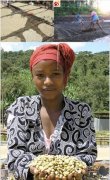
The Storm in the Coffee Cup (Middle)-the tragic Appeal of Ethiopia
It is said that Ethiopia in poor countries is preparing to fight a century lawsuit with Starbucks in rich countries, which has attracted global attention. Ethiopia plays the grief card, and the global media and humanitarian organizations almost lean to the weak. Egypt uses Starbucks' popular "partner Sun Sidama" (Shirkina Sun-Dried Sidamo) as an example to tell the bitterness of coffee farmers: southern Ethiopia.

A brief introduction to the description of Coffee Flavor and aroma characteristics of Coffee Manor in Ethiopia (Moka)
Due to different planting methods, coffee can be divided into three types: forest-semi-forest coffee (Forest or semi-forest coffee), courtyard coffee (Garden coffee) and plantation coffee (Plantation coffee). 60% of the coffee belongs to forest-semi-forest coffee. In such a wild coffee forest, pesticides are not used at all, but biological methods are used to control pests. 35% of the coffee

Introduction to the Flavor description, Grinding scale and Variety treatment of Ethiopian Coffee
Coffee is Ethiopia's most important export cash crop and the main source of Ethiopia's foreign exchange earnings. Ethiopia's coffee exports account for about 3% of the world market, making it the eighth largest coffee exporter in the world. Coffee exports increased steadily from 58000 tons in 1990 to 110000 tons in 1995-1996 and remained at this level in the following years. 2001-2002

Ethiopian boutique coffee Ethiopia boutique coffee flavor Ethiopian boutique coffee
Coffee is Ethiopia's most important export cash crop and the main source of Ethiopia's foreign exchange earnings. Ethiopia's coffee exports account for about 3% of the world market, making it the eighth largest coffee exporter in the world. Coffee exports increased steadily from 58000 tons in 1990-91 to 110000 tons in 1995-96 and remained at this level in the following years. 2001-2002

Details of 90 + series beans. The difference between top coffee, how to drink it after grinding into coffee powder?
Professional coffee knowledge exchange more coffee bean information please follow Coffee Workshop (Wechat official account cafe_style) Rose Summer Coffee beans Panama Ninety Plus 90 + Lot # NP-236-C: Limited Jos Alfredo Panama Ninety Plus 90 + Sun Rose Summer 2017 bidding country: Bana
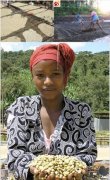
The story of coffee, the sad appeal of Ethiopia.
It is said that Ethiopia in poor countries is preparing to fight a century lawsuit with Starbucks in rich countries, which has attracted global attention. Ethiopia plays the grief card, and the global media and humanitarian organizations almost lean to the weak. Egypt uses Starbucks' popular "partner Sun Sidama" (Shirkina Sun-Dried Sidamo) as an example to tell the bitterness of coffee farmers: southern Ethiopia.